
History of Surgery Part 3 – Jivaka – The Ancient Surgeon of Compassion
Jivaka – The Ancient Surgeon of Compassion
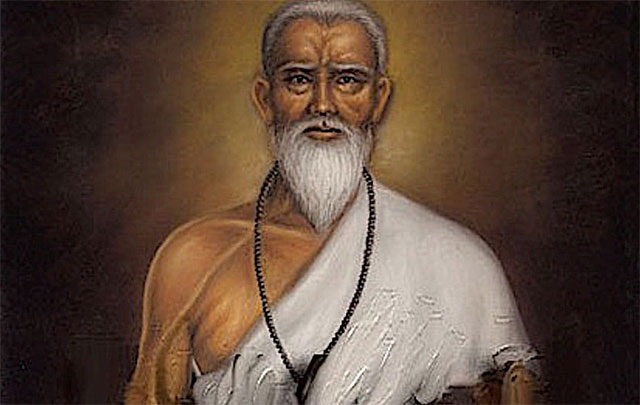
Jivaka, also known as Jivaka Komarabhacca, is revered as one of the earliest and most accomplished surgeons and physicians of ancient India. Flourishing around the 5th century BCE, he is best remembered as the personal physician of Gautama Buddha and the royal doctor to King Bimbisara of Magadha. Though Jivaka was the official personal physician of the Buddha. There is a saying that the Buddha did not make him a monk; he accepted him as his lay disciple because the Buddha wanted him to remain free to tend to sick people. Jīvaka was born in Rajagraha to a courtesan named Shalavati. Deemed unwanted, he was abandoned shortly after birth. Prince Abhaya, son of King Bimbisara, found the infant alive and adopted him—hence the name Jīvaka (“the living one”) and the epithet Komārabhacca (“raised by a prince”)
Educated at the legendary medical university of Takshashila, Jivaka mastered surgery, internal medicine, and herbal pharmacology. Ancient Buddhist texts credit him with performing complex surgical procedures, including abdominal surgery, cranial interventions, wound management, and treatment of intestinal obstruction—remarkable feats for his era.
Surgery for fistula-in-ano was performed on King Bimbisara. This is the procedure that made him famous, as though the surgery for fistula-in-ano was practiced before, but caused a high degree of incontinence. King Bimbisara, a husband to several young wives, became a subject of ridicule because of staining of his underclothes with blood. No royal physician would dare suggest an invasive procedure. Jivaka approached the king with an instrument called “nakha sastra” which has often been wrongly translated as a fingernail, but the actual instrument is one finger in breadth and two to nine fingers in length with a cutting edge. It appears that Jivaka probably made an incision into the fistula, which subsequently healed. The king was pleased with his “grandson” and appointed Jivaka as the royal physician. This eventually led to Jivaka becoming the physician to the Buddha himself. As Jivaka had cured the old king of his ailment, he was again offered payment, which was declined. The king thereupon gifted Jivaka a Palace with a garden full of mango trees and other fruit trees, and a small village within the district. Jivaka was to later build a monastery in this garden for Buddhist monks.(Jivakambhavana)
Craniotomy (Susabadho) to remove what were probably parasites (“panaka”) or clots was one of Jivaka’s other famous operations, which is mentioned in almost all the texts. He performed this on a merchant who was suffering from intense chronic headaches. Jivaka operated on a youth whose intestines had gotten “entangled.” and diagnosed as volvulus. Jivaka did a laparotomy, derotated the intestines, and sutured them back in their proper position. There is a similar description for a strangulated hernia.
A splinter of rock was embedded in Buddha's foot after being hurled by his rival, Devadutta. It was extricated using a small knife “Khaja” by Jivaka. Surgery for hydrocele by Jivaka was called as ‘andavuddhi’. The surgery involved opening the covering of the testicles and removing a hard “bija.”
Jivaka had come across a wealthy merchant whose wife had been unwell for seven years. He had gone to the merchant's house and announced that he was a Vaidya who had come to treat the patient. The merchant's wife had inquired from her security guard about the nature of the Vaidya who had come, and was informed that he was quite young. She had been treated by the most reputed scholars of the city and was hesitant to trust the youthful stranger. However, Jivaka had endeavoured to win her trust and had informed her that he would not request any payment to begin with, but with confidence had told her that she might pay him whatever fee she thought fit, once she was completely cured. With this, the merchant's wife had agreed to be treated by him. As had been taught him during his training, he was said to have firstly applied the technique of “Ashtavida Pariksha" – the eightfold method of examination of a patient. (This constituted examination of the nadi, that is the pulse, the mala, which is the bowel movements and excreta, the mutra, which is the urine, jinva, the tongue, and rupa the patient's body,etc.) Eventually, Jivaka diagnosed that the lady primarily needed treatment for the recurrent headaches. He treated her for a sinus condition with a nasya – an extract of herbs with ghee, and after a while her condition improved. He continued with treatment that completely rid her of her seven-year-long ailments. She was reported to have paid him in 16,000. Kahapanas, silver coins, and so did her grandson and his wife; and her husband gave her in addition, even more coins, servants, a horse and a carriage. Now enriched as he was, Jivaka returned to Magadha to the palace of Prince Abhaya.
There is a similar story that happened in Northern India when Jivaka was summoned by one of the kings who ruled the northwestern part of India, Sibi. A blind Brahmin approached King Sibi and asked for eye donation. The Brahmin asked him because the king had already earned the reputation of a big philanthropist, donating anything you ask for. The king sent a word for Jivaka, and he came and removed both the eyes of the king and fixed them to the Brahmin. This is recorded in the Buddhist chronicles. This is probably the first instance of the organ donation in those days.
Beyond technical skill, Jivaka embodied ethical medical practice. He treated the poor without charge, emphasized compassion toward patients, and integrated moral responsibility into medical care. His approach aligns closely with modern principles of medical ethics, beneficence, and patient-centered care.
Jivaka is also regarded as a pioneer of traditional Indian medicine, influencing early Ayurveda and Buddhist medical traditions across Asia. In many Southeast Asian countries today, he is still venerated as the “Father of Medicine” and a patron saint of healers.
In essence, Jivaka represents the timeless ideal of the surgeon-scholar—scientifically skilled, ethically grounded, and deeply humane—a legacy that continues to inspire modern surgical practice.
The remains of Jivaka’s vihara in the city of Rajgir (Bihar) are still visited by hundreds of people from all over the world.Jīvaka thus occupies a foundational place in the history of Indian surgery—not merely as “the Buddha’s doctor,” but as the earliest historically contextualized exemplar of the Indian surgical tradition. Jivaca is considered as the father of traditional Thai Medicine.
Quiz time
What is one of the most famous surgical procedures Jivaka is credited with performing?
Answer: Surgery for fistula-in-ano on King Bimbisara.
Reference:
1. Zysk KG. Asceticism and Healing in Ancient India: Medicine in the Buddhist Monastery. Oxford: Oxford University Press; 1991.
2. Meulenbeld GJ. A History of Indian Medical Literature. Groningen: Egbert Forsten; 1999–2002.
3. Filliozat J. The Classical Doctrine of Indian Medicine: Its Origins and Its Greek Parallels. Delhi: Munshiram Manoharlal; 1964.
4. Wujastyk D. The Roots of Ayurveda. London: Penguin Classics; 2003.
5. Basham AL. The Wonder That Was India. London: Sidgwick & Jackson; 1954.
6. Bhishagratna KK, trans. The Sushruta Samhita. Varanasi: Chowkhamba; 1907.
