
History of Surgery Part 7 – King Bhoja and ancient Neurosurgery in India
The chronicle of King Bhoja is interesting because of his association with ancient neurosurgical practice in India. This episode is documented in a literary work called Bhoja Prabhanda. It must be mentioned that the distinguishing line between the legends mentioned in these works and the actual occurrences is thin. However, significant documentation and evidence from excavations, even from ancient times, support some of the claims made for that period.
King Bhoja
King Bhoja was a 11 century Parmar king who ruled in the area of present-day Madhya Pradesh. His ‘country’ extended from just east of Bhopal in the east to Sabarmati River in the west, and from Chittor in present day Rajasthan in the north to Konkan in the South.
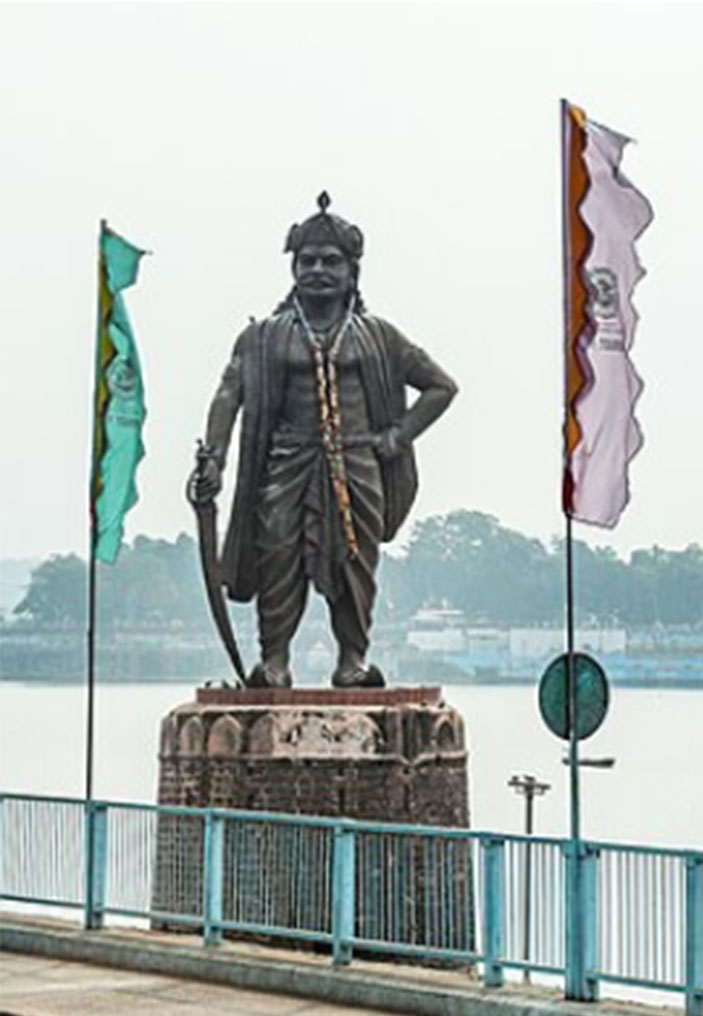
Statue of King Bhoja in Bhopal
His life is chronicled in Bhoja Prabhanda authored by Ballaladeva in the 16th century. King Bhoja was a prolific writer with around 84 literary works attributed to him. The legends surrounding him match those surrounding King Vikramaditya. King Bhoja also fought many wars and was considered a hero by his citizens.
He was troubled by chronic headaches. Medications by his regular court doctors seemed to have no effect. Two Brahmins from Ujjain are credited with curing his headache through neurosurgery. They used anaesthesia, put him into a stupor, made trephinations in his skull and took out a tumour – and this cured him.
Trephination
Trephination or Trepanation involves making a ‘hole’ in the skull. These words are used interchangeably now. But the names are probably derived from the original names of the instruments used in the process.
The process involves scraping, cutting or drilling a hole in the skull. The process was practices as far back as the neolithic period. Trepanation has been documented in excavations of skulls from across the globe. The first ‘proper’ documentation was in mid 1800s from a skull excavated from Peru. Regularly shaped circular or rectangular holes suggest that it is man made. Scarring and ‘healing’ seen in the edges of these holes suggest that the holes were made in a live human and that he/she survived the procedure for a good length of time.
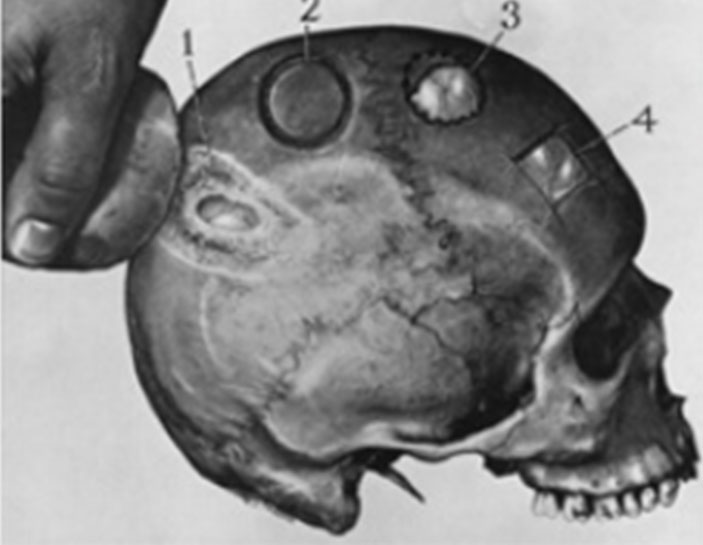
Different methods of trephining: (1) scraping; (2) grooving; (3) boring and cutting; (4) rectangular intersecting cuts. Reference: Gross CG. A Hole in the Head: More Tales in the History of Neuroscience. Cambridge (Massachusetts): MIT Press; 2009
In India, similar skulls with trepanations have been excavated from the Harappan sites (4500 years ago), Kashmir and Karnataka.
Trepanations were carried out for many indications including head trauma (to let the ‘bad blood’ out), headaches, epilepsy and psychiatric disturbances. That the patients survived the procedure has been mentioned. But there is no clear evidence about the patients getting better from the malady. But the fact that the procedure itself survived for such a long time suggests that it had some salutary effect.
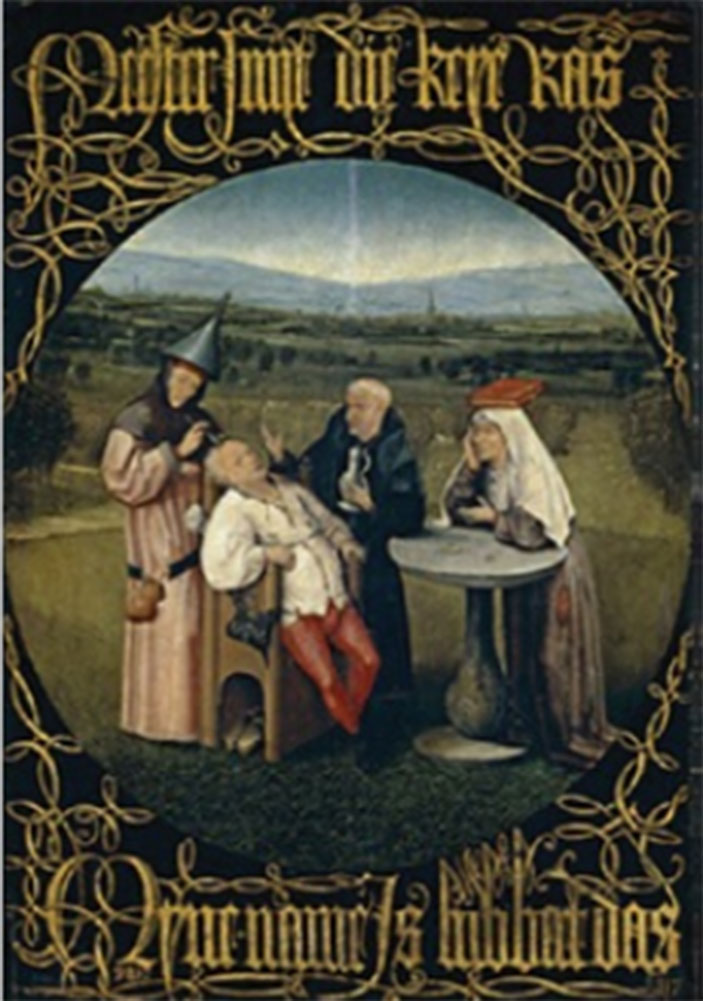
A surgeon removing ‘the Stone of Madness’ by Trepanation; A 15th century Painting
Sushruta (600 BCE), the Father of Indian Surgery is credited with neurosurgical procedures in addition to the famous Rhinoplasty and several other surgical procedures. Sushruta designed and used more than 120 surgical instruments. He described methods of trepanation, extraction of foreign bodies, closure of wounds and application of dressings. Sushruta used some alcoholic potions as a form of anaesthesia.
Jivaka (5th Century BCE) is another well known physician of ancient India. His claim to fame was that he was the personal Physician of Gautama Buddha. Several neurosurgical procedures have been attributed to Jivaka as well.
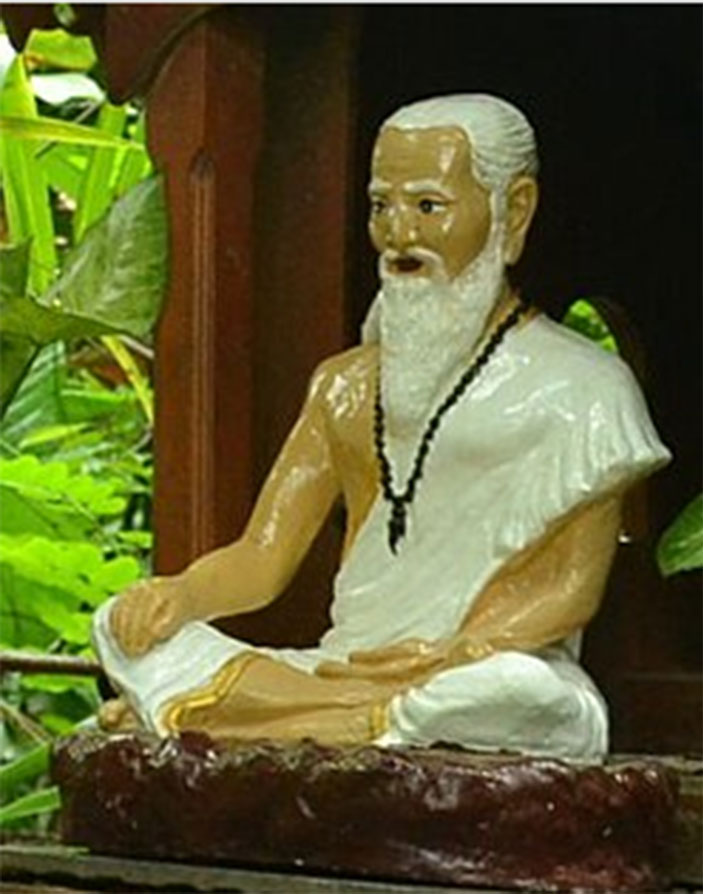
Jivaka, Gautama Buddha’s physician
By the time of King Bhoja (11th Century), with 1500 years of experience, the science of neurosurgery had progressed. The improvement came in the form of anaesthesia. The Brahmin surgeons who operated on King Bhoja used a herbal mixture called Sammohini (probably a combination of cannabis and opium) to induce anaesthesia to the king. After the procedure, they used another herb called Sanjivini to wake him. Botanical equivalents of the herbs matching the descriptions have now been identified.
Thus, it can be seen that ancient Indian Surgeons were in the know of basic neurosurgical procedures. They had sophisticated anaesthetic protocols, designed and used proper instruments and clearly, the patients survived these procedures.
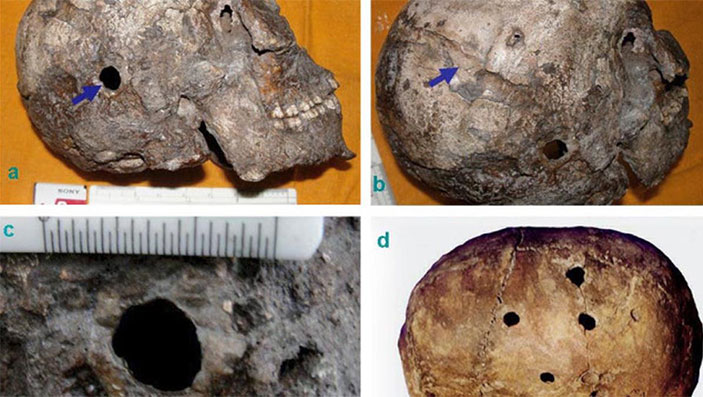
Bronze Age Harappan Trepanation skull (4300 years old)
Further reading:
https://en.wikipedia.org/wiki/Bhoja
https://tamilandvedas.com/2015/06/17/brain-surgery-in-ancient-india-bhoja-and-indus-valley/
Quiz time
Who was the Father of Modern Neurosurgery in India?
Answer – Dr. B. Ramamurthi (who established the first neurosurgical department in Madras in 1950).
History of Surgery ASI team
Dr Kaushik Bhattacharya (Head of the team)
Dr Pratap Varute
Dr Patta Radhakrishna
Dr Surajit Bhattacharya
Dr Clement Rajan
Dr K Lakshman
Dr Mahesh Prabhu
