
History of Surgery Part 8 – Vagbhata and the surgical tradition
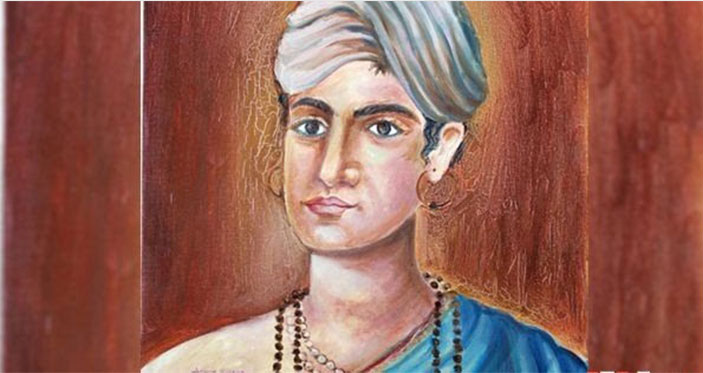
Acharya Vagbhata
When surgeons read the classical texts of Indian medicine, Sushruta naturally commands most of the attention. His operations are vivid, his instruments numerous, and his confidence unmistakable. Yet between the age of Sushruta and the later medieval period, surgical knowledge might easily have thinned out or fragmented. It is largely through Vagbhata that the surgical tradition was gathered, condensed, and transmitted forward.
Vagbhata probably lived around the 6th–7th century CE, was not primarily an operative innovator. His importance lies in preserving surgical principles and presenting them in a structured and teachable form. His two great works, the Aṣṭāṅgasaṅgraha (अष्टाङ्गसंग्रह) and the Aṣṭāṅgahṛdayasaṃhitā (अष्टाङ्गहृदयसंहिता) include substantial material on surgery (Śhalyatantra), wound care, fractures, cautery, and surgical instruments. Though briefer than Suśhruta’s descriptions, they show that a coherent surgical tradition was still alive in early medieval India. Modern philological research, however, argues that these two texts are unlikely to be the work of a single author. The relationship between the two treatises, as well as their authorship, remains a subject of ongoing scholarly debate and has not been conclusively resolved.
The title Aṣṭāṅga refers to the eight branches of medicine: internal medicine, surgery, diseases of the head and neck, pediatrics and obstetrics, toxicology, psychiatry, rejuvenation therapy, and reproductive health. This classification reflects an attempt to organize medical knowledge into a coherent system. For the modern reader, it suggests a curriculum rather than a manual, a structured approach to medical education.
The Concept of Shalya
The Sanskrit word śhalya refers to a sharp instrument (spear, javelin, arrow or a thorn) foreign body or anything that must be removed from the body. From this comes Śhalyatantra, the branch of medicine dealing with surgery. Vagbhata adopts this classical concept and describes a range of conditions requiring surgical intervention foreign bodies, abscesses, calculi, dead tissue, and traumatic wounds.
The surgeon’s role was therefore defined not only by cutting but by removal: removing pus, removing foreign material, removing devitalized tissue. The idea is strikingly close to what we would now call debridement.
Wound Care and Healing
One of Vagbhata’s most practical contributions lies in his descriptions of wounds (vrana). He classifies wounds by cause traumatic, surgical, and inflammatory and also by their condition. Clean wounds, contaminated wounds, and infected wounds are described in different terms, each with its own management.
The principles of treatment are logical and sequential. A wound must first be cleaned. Any foreign or dead material must be removed. Only then can healing proceed properly. Vagbhata repeatedly emphasizes that retained debris or devitalized tissue interferes with healing, a principle that remains fundamental in modern surgery.
Suppuration is described as a stage in the evolution of certain wounds. The surgeon is advised to recognize the signs of abscess formation swelling, pain, warmth, and fluctuation and to intervene when pus has formed. Premature incision is discouraged, but so is delay once suppuration is evident.
Drainage of abscesses is described in straightforward mechanical terms. The incision must be adequate, and the cavity must be allowed to empty fully. After drainage, dressings are applied to promote healing from within. The emphasis on adequate drainage reflects long practical experience with soft tissue infections.
Chronic wounds receive special attention. Vagbhat describes methods to stimulate healing in wounds that fail to close, including cleaning, scraping, and the application of medicinal substances. The idea that a wound might need to be “refreshed” before it can heal is familiar to any modern surgeon dealing with chronic ulcers.
Debridement
Although the modern term does not exist in the text, the concept of debridement is clearly present. Dead or unhealthy tissue is described as an obstacle to healing and must be removed. This may be done with cutting instruments or by other means. The wound is then treated so that healthy tissue can form.
This principle appears repeatedly in classical Indian surgery and remains one of its most enduring contributions.
Bandaging
Bandaging is discussed in considerable detail. Vagbhat describes a variety of bandage types, each suited to a different region of the body. The bandage must be firm enough to support the tissues but not so tight as to impair circulation.
Special bandaging techniques are described for the limbs, joints, and trunk. The importance of maintaining the correct position during healing is emphasized. The surgeon is advised to check bandages regularly and adjust them as needed.
The descriptions suggest a practical familiarity with postoperative care and the management of injuries.
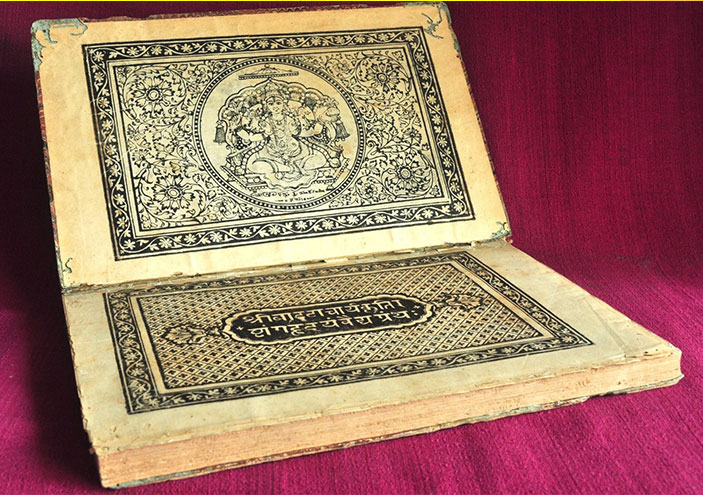
Original lithographic print of the book Aṣṭāṅgahṛdayasaṃhitā written by Vagbhata printed in 1860s
Fractures and Dislocations
Fractures are described in terms of displacement and instability. The basic principles of treatment are recognizable: reduction, alignment, and immobilization.
The injured limb is first brought back into proper position. It is then supported with splints and bandages. Movement is restricted until healing has occurred. Vagbhata emphasizes that improper alignment leads to deformity and impaired function.
Dislocations are treated by manipulation followed by immobilization. Careful handling is advised, and excessive force is discouraged. The emphasis on gentle but effective reduction suggests a developed understanding of musculoskeletal injuries.
Surgical Instruments
Like Sushruta, Vagbhata describes a range of surgical instruments, though in less detail. These include cutting instruments, probes, forceps, and needles. Instruments are to be kept clean and in good condition.
The surgeon is expected to be familiar with the proper use of each instrument. Precision and control are emphasized over force.
Though the descriptions are brief, they reflect an established operative practice in which specialized tools were used for specific purposes.
Cautery
Cautery occupies an important place in Vagbhat’s surgical practice. Two forms are described: thermal cautery (agnikarma) and chemical cautery (kṣhārakarma) (akin to ksharasutra).
Thermal cautery is used to control bleeding, destroy diseased tissue, and treat certain growths. Chemical cautery uses caustic substances to achieve similar ends. Each method has specific indications, and improper use is warned against.
Cautery is presented not as a last resort but as a standard surgical tool. Its careful and controlled application suggests considerable experience.
Bloodletting
Bloodletting is described as a therapeutic procedure in selected conditions. Methods include venesection and the use of leeches. Though based on the humoral theories of the time, the techniques themselves required practical skill.
The descriptions include guidance on patient selection and technique, indicating that these procedures were performed with some regularity.
The Surgeon
Vagbhata’s description of the surgeon is worth noting. The surgeon must be steady-handed, observant, and disciplined. Cleanliness is emphasized, both in the person and in the instruments. The surgeon must understand the disease before attempting treatment.
Vagbhata’s Place in Surgical History
Vagbhata does not describe rhinoplasty with the detail found in Sushruta, nor does he present dramatic new operations. His importance lies elsewhere. He preserved the principles of surgery at a time when they might otherwise have faded.
Through his writings, the essential elements of surgical practice wound care, drainage, debridement, fracture management, and operative technique were organized into a coherent system and transmitted to later generations.
For modern surgeons, Vagbhata offers a glimpse of a tradition in transition. The bold experimental phase of early surgery had passed, but the craft itself remained alive. The operating surgeon was still present, treating wounds, draining abscesses, setting fractures, and managing injuries much as surgeons would for centuries afterward.
If Sushruta represents the birth of Indian surgery, Vagbhata represents its continuity.
From a historical perspective, Vagbhata represents a bridge between worlds. Behind him lie the great surgical traditions of ancient India. Ahead lies the long medieval period, during which medical knowledge was preserved in monasteries, courts, and teaching lineages. Without authors like Vagbhata, much of the earlier tradition might have been lost or scattered.
If Sushruta can be imagined as the master surgeon, then Vagbhata might be seen as the professor who ensured that the knowledge endured. His contribution was not dramatic, but it was essential. He gathered what was known, organized it, and presented it in a form that could be taught and remembered.
References
1. Vagbhata. Ashtanga Hridayam. Translated by K.R. Srikantha Murthy. Varanasi: Chaukhambha Krishnadas Academy.
2. Vagbhata. Ashtanga Sangraha. Translated by K.R. Srikantha Murthy. Varanasi: Chaukhambha Orientalia.
3. Meulenbeld GJ. A History of Indian Medical Literature. Groningen: Egbert Forsten; 1999.
4. Filliozat J. The Classical Doctrine of Indian Medicine. Delhi: Munshiram Manoharlal; 1964.
5. Wujastyk D. The Roots of Ayurveda. London: Penguin Classics; 2003.
6. Sharma PV. History of Medicine in India. New Delhi: Indian National Science Academy; 1992.
7. Menon, I (2010). "The Ashtavaidya physicians of Kerala: A tradition in transition". Journal of Ayurveda and Integrative Medicine.
Footnote
In addition to textual and scholarly study, Vagbhat is associated with a number of regional traditions in India, particularly in Kerala, where classical Ayurveda developed distinctive institutional lineages. These traditions form part of the cultural history of Ayurveda but are generally treated by historians as legendary or devotional accounts rather than established historical biography.
In Kerala, hereditary families of Ayurvedic physicians known as Ashtavaidyas (literally, “masters of the eight branches of Ayurveda”) preserved classical texts and clinical practices connected to the Aṣṭāṅga system described in Vagbhat’s works. Ethnographic and historical surveys of Kerala Ayurveda note that these families often traced their intellectual lineage to classical authors such as Vagbhat, Charaka, and Sushruta, though such links are understood as traditional affiliations rather than direct teacher–disciple relationships.
One such Ashtavaidya lineage is the Pulamanthole Mooss family of present-day Malappuram district, Kerala. Local family histories and community narratives maintained by the Pulamanthole Mooss tradition state that Vagbhat spent his final years in the Pulamanthole region and that a memorial site (samādhi) associated with him exists there. This association is referenced in institutional histories and regional cultural accounts but is not supported by epigraphic, archaeological, or contemporaneous textual evidence accepted by mainstream historians
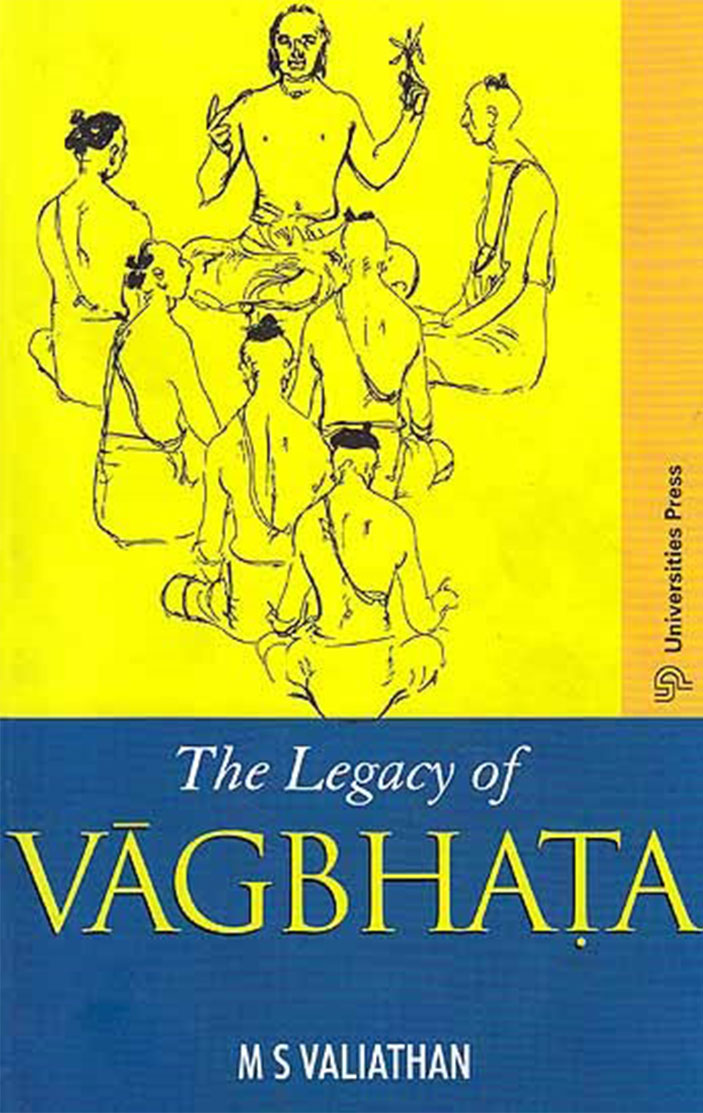
The legacy of Vagbhata written by Dr. MS Valiathan
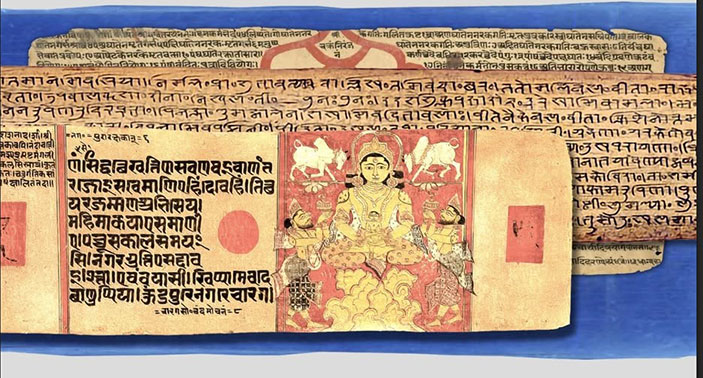
Digital Rare Book:
Astanga Hrdaya of Vagbhata (500-600 CE)
Quiz time
Which of Vagbhata’s texts is written mainly in concise poetic verses and became widely popular among physicians?
Answer – Ashtanga Hridaya
History of Surgery ASI team
Dr Kaushik Bhattacharya (Head of the team)
Dr Pratap Varute
Dr Patta Radhakrishna
Dr Surajit Bhattacharya
Dr Clement Rajan
Dr K Lakshman
Dr Mahesh Prabhu
